
The challenge
When people worry about a symptom, they search. Increasingly, they ask an AI. Radimed's radiologists could answer any of those questions in the exam room, but that deep clinical expertise wasn't translating into being the clinic patients found first.
The site told the story: the homepage was the top page, average Google position sat around 13, and Radimed had no presence in AI answers. Search performance was underperforming the clinical reputation.
The solution
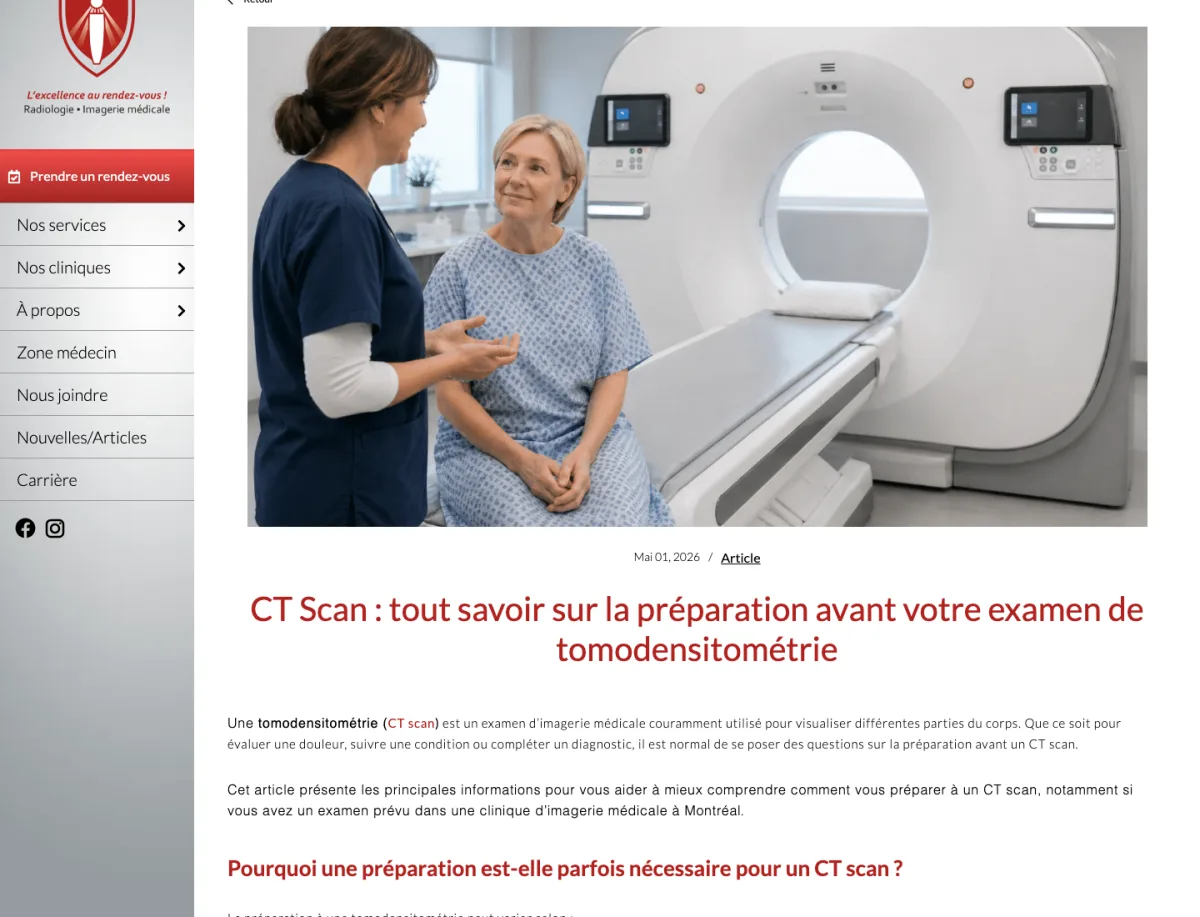
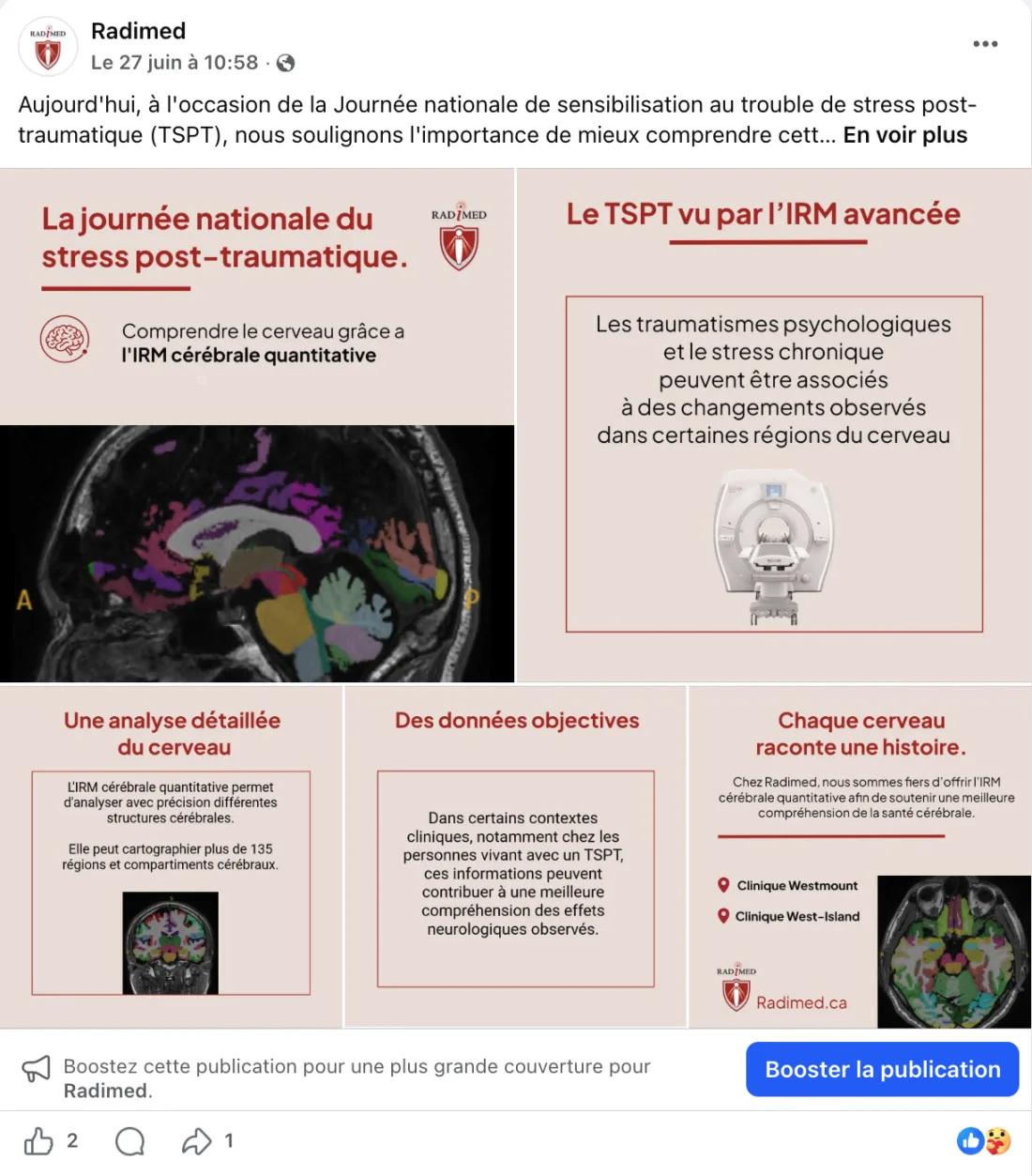
Expertise-led articles on real patient questions
Long-form clinical content, written from the radiologists' answers to the questions patients search, published directly on Radimed's site.
SEO built for how search works now
Articles structured for entities, definitions, and clean sourcing, so Google surfaces the article itself rather than just the homepage.
GEO so the same articles get cited by AI
Answer-engine visibility monitored weekly, so Radimed's content is what Google AI Overviews, ChatGPT, and other assistants reach for when patients ask.
The results
One article tells the story. The "pierre aux reins" (kidney stone) piece has drawn 32,686 clicks and 1.1M impressions, making it the site's #1 page, ahead of the homepage. Sitewide, average Google position improved from 13.4 to 7.2 in 10 months, and organic conversions grew 14%, roughly five times faster than traffic. The content converts better than it attracts, which is what expertise-led pages are supposed to do.
The same articles now do double duty in AI answers. Radimed is cited on 30+ queries in Google AI Overviews, including "irm" at 9,900 searches a month. GA4 has tracked 111 sessions from AI assistants this year, converting at 7.2%. Visibility came first; the opportunities followed.