Your Boss Just Searched for Your Business in ChatGPT. Did You Show Up?
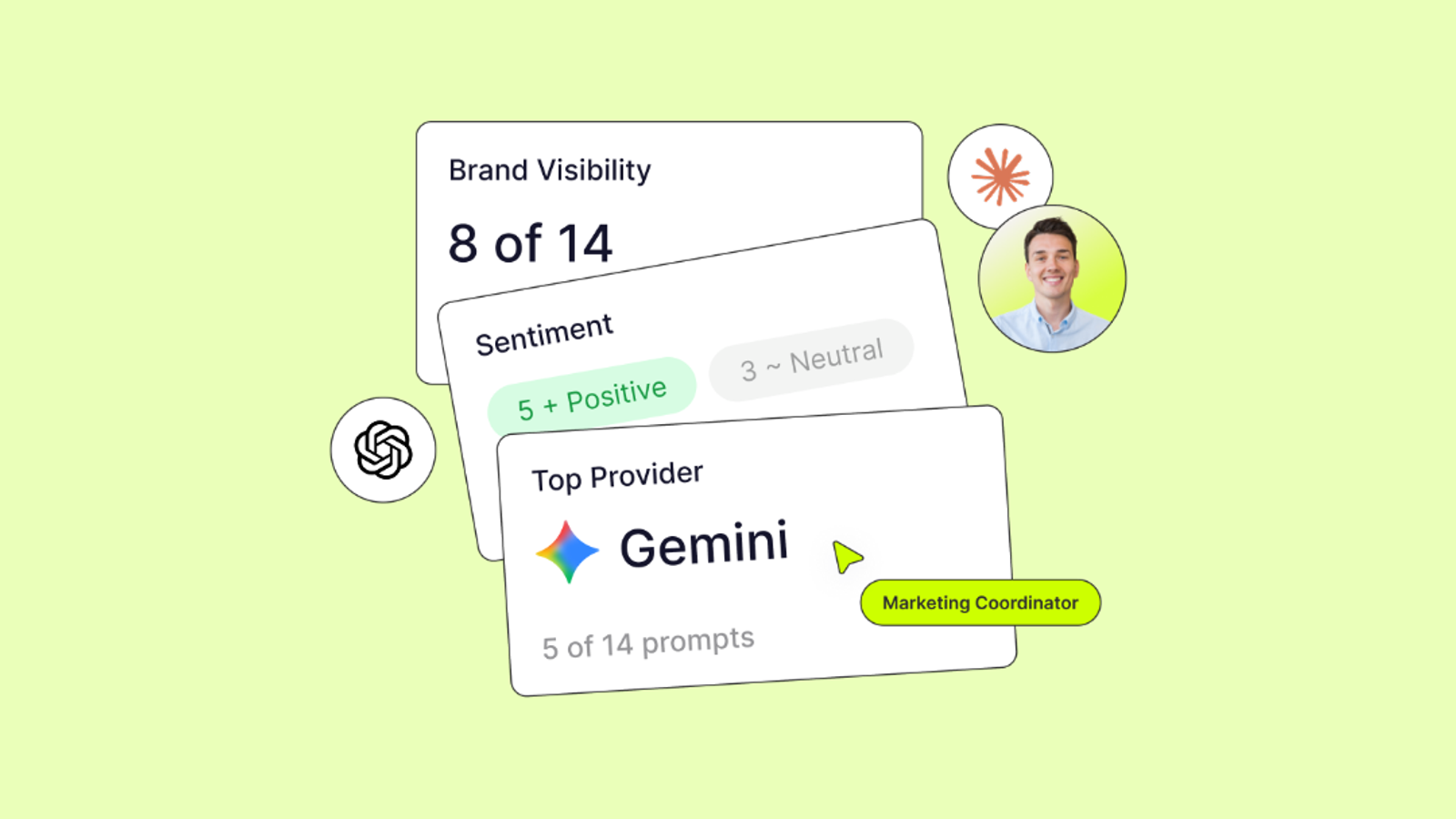
Table of Contents
It’s a scenario playing out in boardrooms and chat threads right now: a senior leader pulls up ChatGPT, types in a question about your category, and finds your competitors — not you. Then comes the question no marketer wants to answer cold: “Why aren’t we showing up here?”
If you don’t have a clear answer, you’re not alone. But the window to get ahead of this is open right now, and it won’t stay that way.
Something Fundamental Has Shifted in How People Discover Brands
For years, the playbook was straightforward. You optimized for Google, earned your rankings, and drove traffic to your site. It wasn’t easy, but the rules were established and the tools were mature.
That playbook is getting a new chapter.
More than 50 million ChatGPT messages per day now involve some form of purchase intent. People aren’t just using AI to summarize documents or draft emails — they’re using it to find products, compare options, and make buying decisions. According to recent research, 79% of consumers say AI makes them more confident in their purchases. And, among Gen Z, AI adoption in the shopping journey is already at 85%.
The behaviour shift is real: where search results once put your brand in contention, AI is now making the shortlist for your customer. And that shortlist is, literally, short: often just one to three recommendations.
What makes this especially important for marketing leaders is how invisible the problem can feel. Your Google Analytics might look fine. Your rankings might be holding steady. Your campaigns might be performing. But if your business is being excluded from AI answers, you’re losing influence over buyers who may never reach your website at all. They’ve already made up their mind — with a little help from an AI that didn’t mention you.
What Is Generative Engine Optimization?
Generative Engine Optimization (GEO) is the practice of making your content visible and credible to AI-powered tools like ChatGPT, Google’s AI Overviews, Gemini, Perplexity, and Claude.
Think of traditional SEO as earning a spot on the library shelf. GEO is about becoming the source the librarian recommends when someone asks a question out loud.
Where SEO is about ranking high enough that users choose to click on you, GEO is about being the brand an AI selects and cites when it synthesizes an answer. The user never sees a list of ten results — they get a direct recommendation. That’s a fundamentally different competitive dynamic.
The critical thing to understand: strong SEO rankings do not guarantee AI inclusion. A brand can rank on page one of Google and be completely absent from AI answers. These are two separate visibility games.
This doesn’t mean your SEO investment was wasted. The two disciplines share a foundation — quality content, clear structure, demonstrated expertise. But GEO requires deliberate, specific efforts that are tailored to how AI finds and serves information.
How Do AI Engines Decide What to Recommend?
AI models evaluate sources and then determine what’s the best thing to provide to a user based on their prompt. When someone asks ChatGPT a question, the model draws on training data and, increasingly, live web content to construct an answer. It prioritizes sources it can trust, extract clearly, and confidently cite.
That means the brands that show up in AI answers tend to share a few characteristics in their content:
Clarity. Their content answers questions directly. Not buried three paragraphs in — right up front, in plain language.
Structure. Information is organized in a way that’s easy to extract: clear headings, logical flow, well-defined claims.
Credibility. The brand has consistent, factual information across its website, and that content demonstrates real expertise — not just keyword density. AI models look for what’s sometimes called “semantic authority” — the signal that a brand genuinely knows its subject matter.
Freshness. AI models favor content that’s current and consistent. Outdated or contradictory information across different properties works against you.
These aren’t complicated principles. But they do require intentionality — and right now, most brands haven’t applied them with GEO in mind. The good news is that this is exactly the kind of structured, strategic work that a focused team can execute without needing a large headcount or a specialized agency.
Why This Moment Is a Rare Opportunity
Here’s what makes this moment special in the era of AI: the playing field is level.
In early SEO, domain authority compounded over years. Brands with big budgets and big teams built moats that were difficult to overcome. GEO doesn’t work that way. Right now, AI models aren’t inherently biased toward large, well-known companies. They favor well-structured, credible content, and that’s something any business can produce.
A focused team with a smart GEO content strategy can earn AI citations ahead of a larger, slower competitor. Think of this moment like the early days of SEO — when showing up was more about understanding the rules than outspending your competition. That era created enormous advantages for the businesses that moved first, who had the budget to do so. GEO is that moment, happening right now, in real time, but getting your GEO strategy up and running isn’t reliant on massive budgets and hyper-specialized talent.
The Pillars of a GEO Strategy
You don’t need to overhaul everything at once. A sound GEO strategy is built on a few foundational pillars:
Know where you stand. Before optimizing anything, you need an honest picture of where your brand appears — and doesn’t appear — in AI answers for the questions that matter to your buyers. Most businesses have no idea. That’s your starting point.
Understand which questions matter. GEO isn’t about targeting keywords the way SEO is. It’s about identifying the natural-language questions your buyers are asking AI, and ensuring your content is the best answer to those questions.
Build answer-ready content. This means structuring content so AI can easily extract and cite it — clear summaries up front, factual claims, consistent information, and content that reads like a trusted expert, not a sales pitch.
Monitor your share of voice. AI visibility isn’t a one-time fix. Models evolve, competitors update their content, and your share of AI recommendations will shift. Ongoing tracking is what separates brands that maintain visibility from those that slip after an initial push.
Don’t stop at one language. AI models answer in the language the question was asked. A brand whose content exists only in English is absent from every French, Spanish, or German query — however well-structured and credible that English content is. It’s the same blind spot you’d have in traditional search, and it surfaces in AI answers the same way. If you sell into more than one market, localizing your answer-ready content is part of the work; tools like Lara Translate handle the translation side.
Each of these pillars compounds on the others. Brands that move through them systematically, at a measured pace, build AI visibility that’s durable. Brands that skip directly to content production without understanding their baseline or their target questions tend to produce a lot of content that still doesn’t get cited.
How Glowtify Approaches GEO
Plenty of marketers have GEO as something on their list of things to consider this year. Knowing it’s important is one thing, but understanding where to start, what to prioritize, and how to track whether any of it is working (especially without adding headcount or budget to figure it out) is where help is needed. And it’s the gap we’re closing.
Glowtify’s GEO capabilities give marketing teams a structured workflow for turning GEO from a vague priority into a completed task.
Here’s what that looks like in practice:
AI Visibility Audit. See exactly where your brand appears — and where it doesn’t — across ChatGPT, Gemini, and Claude for the questions that matter most in your category. This is your baseline, and it’s often eye-opening. Many teams discover that competitors are consistently showing up in AI answers while their own brand is absent.
Query Portfolio. Understand which questions your buyers are actually asking AI — not just which keywords they’re typing into Google. These are the prompts you need to be winning, and Glowtify helps you identify and prioritize them.
Answer-Readiness Scoring. Get a clear view of how extractable your content is to AI engines — and specific recommendations on where to improve, whether that’s heading structure, FAQ coverage, schema markup, or the quality and consistency of your claims.
Content Generation. Create blogs and content that’s structured for AI citation from the start — not retrofitted after the fact. Glowtify’s content tools combine your SEO keyword strategy with GEO-specific structuring so you’re not choosing between the two, and both work in harmony, based on what your customer is asking throughout their purchasing journey.
Ongoing Tracking. Monitor your mentions, sentiment, and share of voice over time across AI platforms. Because GEO is a moving target, ongoing measurement is what lets you know whether your efforts are compounding or if a competitor is starting to close the gap.
The result is a workflow that’s manageable for lean teams and measurable from day one — without requiring months of manual research or deeply specialized knowledge to operate.
The Brands That Start Now Will Compound Their Advantage
GEO is still early enough that moving now is meaningful. The businesses building authority in AI search today are doing what smart teams did in the early days of SEO — getting in before the space is crowded, learning the rules before they’re fully written, and compounding those advantages over time.
You don’t need a massive team or specialized agency to get started. You need clarity on where you stand, a strategy built around the right questions, and content structured for how AI actually evaluates sources.
The best first step is knowing where you stand.
We’re offering free GEO audits for businesses that want to see exactly how they’re showing up in ChatGPT, Gemini, and Claude.
In 30 minutes, you’ll see which AI answers include your brand, where your competitors are getting cited instead of you, and the fastest wins available to you right now.
Book your free GEO audit here (Don’t let your boss find out before you do!)