The Importance of Content Pillars in Driving Engagement & SEO

Table of Contents
3 great examples of ecommerce content pillars
Content is one of the most effective ways to attract, engage, and influence consumers online. The challenge is that not all content is created equal.
So while it’s easy for marketers to create content on any topic – particularly with the advancement of AI tools like ChatGPT – it’s high-quality and relevant content that your customers need and want.
Find out how to use content pillars to supercharge your content marketing strategy to drive high- intent traffic that’s more likely to convert.
Content marketing is vital for ecommerce marketers with 87% reporting it helped increase brand awareness, 74% generated demand or leads through content, and 49% directly attributed revenue growth to content marketing efforts, according to the Content Marketing Institute.
Content marketing is vital for ecommerce but 58% of B2B marketers rate their content strategy as just “moderately effective,” according to the Content Marketing Institute. The reason? B2B marketers believe that their strategy is not tied to the customer journey (39%), not data-driven (35%), or relies on ineffective audience research (29%).
This is why marketing leaders need to be strategic about their content marketing efforts. It’s not about having content on every channel, it’s about creating and sharing valuable, relevant, and consistent content tailored to your target audience.
That’s where content pillars can make a huge difference.
Definition: What is a content pillar?

Content pillars are the themes or topics that form the framework of your content marketing strategy.
Each pillar should be a core topic that’s relevant to your business and will help promote the products or services and values of your ecommerce brand.
Think of content pillars as a scaffold that you build everything on. Each layer of content you add should have a purpose that’s always linked back to the core theme to make the structure (and your content) stronger.
The aim of using content pillars is to give your audience in-depth information on key themes and topics. This will not only provide value to prospects and customers but also build your credibility to become a thought leader in a particular area.
Why are content pillars important?
Content pillars help organize and optimize your content. No matter how good your keyword research is, it’s challenging to cover every word and phrase that your audience searches for.
Just think about the rise in popularity of voice search using smart devices and how Google is prioritizing AI-generated searches (AI Overviews) over organic and even sponsored content.
By creating content pillars you can create content that covers all bases to offer your audience all the information they need on that topic.
The other important factors to having content pillars are they help to:
- Boost organic traffic
- Engage your audience
- Drive high-intent conversions
- Leverage Google’s Experience, Expertise, Authoritativeness, and Trustworthiness (E-E-A-T) ranking factor
- Attract quality backlinks
- Link to relevant internal content
How can you choose content pillars?

Before you get started creating content pillars, it’s important to know the different types. Each one has a specific aim to help you attract an audience.
- Authority or guide pillar content – This type of content provides an overview, 101, or dummy guide to the topic. What this means is that you can have a hub piece of content and build out spokes that go into more detail to build on the topic. For example, let’s say you sell high-end trainers. A hub piece of content could be ‘Your Ultimate Guide to the Perfect Trainer’.
- Definition or What is? pillar content – The focus for this pillar content is on discoverability. You want to create content that unravels so every aspect of the content is covered in detail. This can be beneficial for a beginner audience who want to know more about a topic and you can be the go-to for that information. Building on the trainer example, the hub piece here could be ‘What are the Different Trainer Types and How Can You Find the One that Suits You?’
- How-to pillar content – The content you create here would have the goal of acting as a manual or helping a customer solve a problem or task. It can be a step-by-step guide and which is suited to video content as tutorials work well. The hub content here could be ‘How to get the most common stains out of your trainers‘.
With this in mind, let’s look at how to create content pillars.
Know your audience
There’s no point creating content if you don’t know who it’s for! If you don’t already have buyer personas, then you need to create them. Do your research and gather relevant data across all channels to figure out who your target audience is. Don’t just focus on demographics like age, gender, and location. Get down to the nitty gritty and look at people’s interests, pain points, and goals.
Look at what’s gone before
Existing content and campaign performance can tell you a lot about what resonates. Look at your top-performing blogs or social media posts to see what people engage with. See if there are any patterns or keywords and key phrases that your audience seems to be looking for. Then use these insights to inform and craft your content pillars.
Pick your pillar topics
With your audience in mind, narrow down your core topics to 3 or 5 pillars. More than that and you risk trying to cover too much ground and diluting your content. Make sure the topics or themes you choose are relevant to your business, brand values, and mission.
Research keywords
With new content pillars selected, it’s time to do your keyword research. Don’t rely on what’s gone before. Research and identify keywords with fresh eyes so you can really dive into each topic to provide valuable information and also start your journey to being an authority in each area. Tools like AnswerthePublic or Google Keyword Planner are good places to start. Make sure to factor in search volume and keyword difficulty to know how easy or difficult it will be to rank as part of your SEO content marketing efforts.
Layout a pillar plan
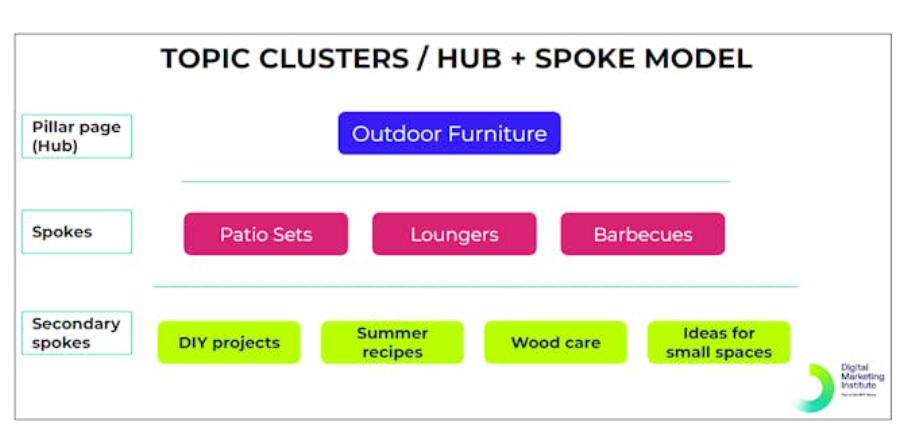
With your content pillars in place and armed with keywords, it’s time to map out the structure of each one. Think of it like a spider map where you have a hub piece of content and then several spokes that explore the topic in more detail. Here’s an example from the Digital Marketing Institute that focuses on the pillar topic ‘Outdoor furniture’.
Audit existing content
Don’t forget about your existing content when it comes to content pillars. With clarity over the direction of your content, it can be easy to tweak or update existing content (particularly top-performing content) to fit into the pillar structure. Alternatively, look at content that may not be serving this new strategy and either edit, hide, or redirect.
Create your content
You should now have everything you need to create content that feeds into your pillars. Don’t focus on one content type either. Make sure you have a mix of formats such as blogs, videos, or infographics to drive engagement. Remember to also be creative and inject some personality into the content.
Develop a linking structure
With each piece of content you publish, ensure you include internal links to build a scaffold. Link each spoke to the hub page so that the content is connected using clear anchor text. Your audience will appreciate the depth of knowledge and so will search engines when it comes to SEO rankings!
Share content
Now that a lot of hard work is done, it’s time to share what your team has created. Use the channels that have been most successful in the past and see what happens to the metrics. It’s also worth considering new channels if the content lends itself to it such as social media, especially when the global social commerce market is projected to reach $13 trillion by 2033. This growth is driven by the increasing integration of social platforms like TikTok, Instagram, and Facebook into ecommerce, particularly with the rise of livestream shopping and short-form video content.
How to track content pillar performance
The performance of your content pillars should be determined by your goals and website performance metrics or key performance indicators or KPIs.
You should already have these metrics for your content marketing, so review these to see if they are still relevant. Examples of KPIs are:
- Organic traffic
- Search engine ranking
- Conversion rates
- Engagement rates
- Revenue or sales
Google Analytics is a great tool for measuring performance across channels while a platform like Glowtify can track the performance of your content marketing and offer optimizations based on content pillars.
3 great examples of ecommerce content pillars
There’s no better way to understand how to create content pillars than learning from others who have succeeded.
Here are some great examples of ecommerce companies that have nailed what their company is about and what their audience wants to hear which comes through clearly in the content they create.
1. Rothy’s

Sustainable footwear and accessory company Rothy’s is one of Shopify’s most successful ecommerce stores.
The goal is to create products from single-use plastic to reduce excess waste and “do right by the planet and its people”. So it should come as no surprise that their content pillars are focused on and lean into that mission while also offering insights into the fashion industry and trends.
Rothy’s blog ‘The Loop’ focuses on four key areas that make up its content pillars: outfit and style ideas, trending shoes and bags, lifestyle, and sustainability.
Each blog feeds into one of these pillars which extends to Rothy’s social media platforms and email content.
2. Cocofloss
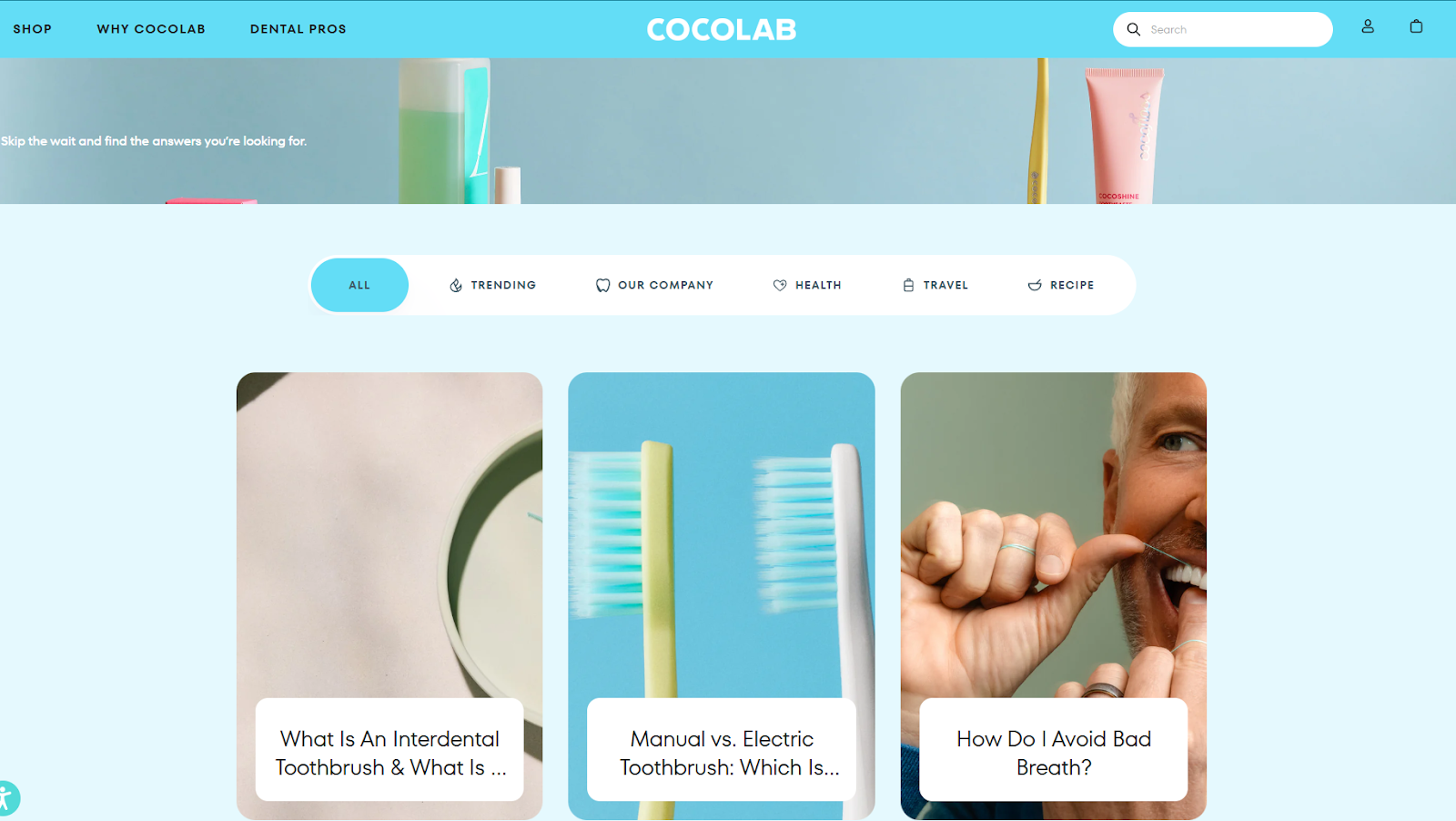
Subscription-based company Cocofloss sells boxes of oral care products, including dental floss and toothbrushes. Founded by two sisters, one a dentist and the other an artist, the company’s mission is to make flossing more “fun, motivating, and rewarding.”
To engage customers, Cocofloss focuses its content on a few key areas that make up its pillars on the Coco Learn blog:
- Trending
- Health
- Travel
- Recipe
- Company
The last topic is more about company news but as Cocofloss focuses on its products being environmentally friendly, the category is a nod to their ethos and mission.
3. Gymshark

Fitness apparel and accessories brand, Gymshark relies primarily on traffic to its website to sell products. While it sells clothing to both men and women, it also has a fitness app and multiple partnerships with influencers and brands.
Despite multiple business lines, the company stays true to its key offering by creating content that aligns with its brand, tagline ‘We Do Gym’ and pillars.
While focusing on brand and style, Gymshark also creates content that covers health and fitness. The content clusters it creates that feed into each pillar are also defined. For example, under ‘health’ it creates content for mindset and wellbeing, nutrition, and recipe.
Conclusion
Content marketing is an effective way to attract prospects and connect with customers.
But you need a strategy to make an impact, particularly when there’s so much content out there and so many brands looking to make an impact on consumers.
So if you’re a marketing leader in an ecommerce brand, developing content pillars will help ensure that your team creates relevant, valuable and tailored content that ranks on search engines.