Digital Marketing for Manufacturers: Tactics That Work

Not long ago, buyers looked for suppliers through referrals and organized events like trade shows. While many still use these old methods, most customers now search online. Potential buyers check company websites to learn about the products and services different suppliers offer, and ask search tools for recommendations.
If they cannot find your company or understand what you offer, they may move on to another supplier. This is where digital marketing for manufacturers can help. Good marketing for manufacturers helps potential buyers find your company and understand what you offer. Your website and other forms of online communication can give buyers the information they need when they do their research. After all, in today’s digital landscape, having an online presence is not an option, but a need.
Why Buyers Stopped Trying to Find You
Exceptional products or services are useless nowadays if your business lacks a digital presence. Even if your company has been in the industry for decades, if your name does not show up in search results, you miss out on opportunities and lose potential sales. So why is your business not appearing in AI tools?
#1 You are Hard to Find on Google
When your website does not show up near the top of Google when buyers search for your products or services, it could be because of poor search engine optimization (SEO) or lack of useful content. SEO uses automated programs or crawlers to browse the Web and read data so that they can rank the most relevant pages and increase their visibility.
#2 Your Website is Difficult to Use on a Phone
Your website might be slow when visitors use their phones to search because it may not have been designed for mobile use. When your site is hard to access, it may result in buyers leaving your page without asking for a quote or contacting you.
#3 You are Using the Wrong Platforms
One common mistake marketing companies make is focusing only on being visible on traditional search engines. They forget that buyers also search for recommendations on marketplaces, social media, and AI search tools. If you want your business to be recognized and mentioned, you must tap different platforms.
One way to understand where your business stands in AI search is through Glowtify’s AI visibility audit. It checks whether AI tools mention your business when buyers ask questions related to your products or services.
What Is Different About How Industrial Buyers Research
Everyday shoppers often research products online, asking for recommendations. They compare products, check prices, and read customer reviews before deciding what to buy.
Industrial buyers do their research differently. They usually do not make quick buying decisions based on advertising or emotion alone. They take their time, looking closely at technical information such as specifications and measurements. They look for proof that a product works by reading case studies and asking for certifications. They also check the total cost of a product, not just the purchase price, before making a decision.
Seven Tactics That Earn Inquiries
Earning inquiries is not difficult if you apply these simple marketing for manufacturing industry tactics to your business:
#1 Make It Clear What You Do
It is important to make your message simple and clear so that potential buyers know what your company does and offers right away. The main page of your website should have a short headline that presents your business as the best solution to your reader’s problem. This headline should be able to explain your products and services in detail so that customers know if you can handle their project. Consider the questions they might have, and answer these questions as briefly and directly as possible.
#2 Make Your Website Easy to Find
Following the key steps for SEO can make your website searchable. Use words that your customers are likely to search for. These keywords could include the names of your products, materials, or services. Place these keywords in your title and headings. Bear in mind, however, that the goal is not to stuff your website with keywords because Google flags repeated words as spam.
#3 Answer the Questions Buyers Ask
Manufacturing buyers take their time when researching a product so they know if they should purchase. They make sure a product is right for their project by asking questions about it. Your website can answer these questions through articles, guides, product information, and case studies. Creating this type of useful information is an important part of content marketing for manufacturers because it gives potential buyers the answers they need while they are still researching. But you should also know which questions potential buyers usually ask. You can identify these questions by searching online communities, getting customer feedback, and reviewing competitor pages.
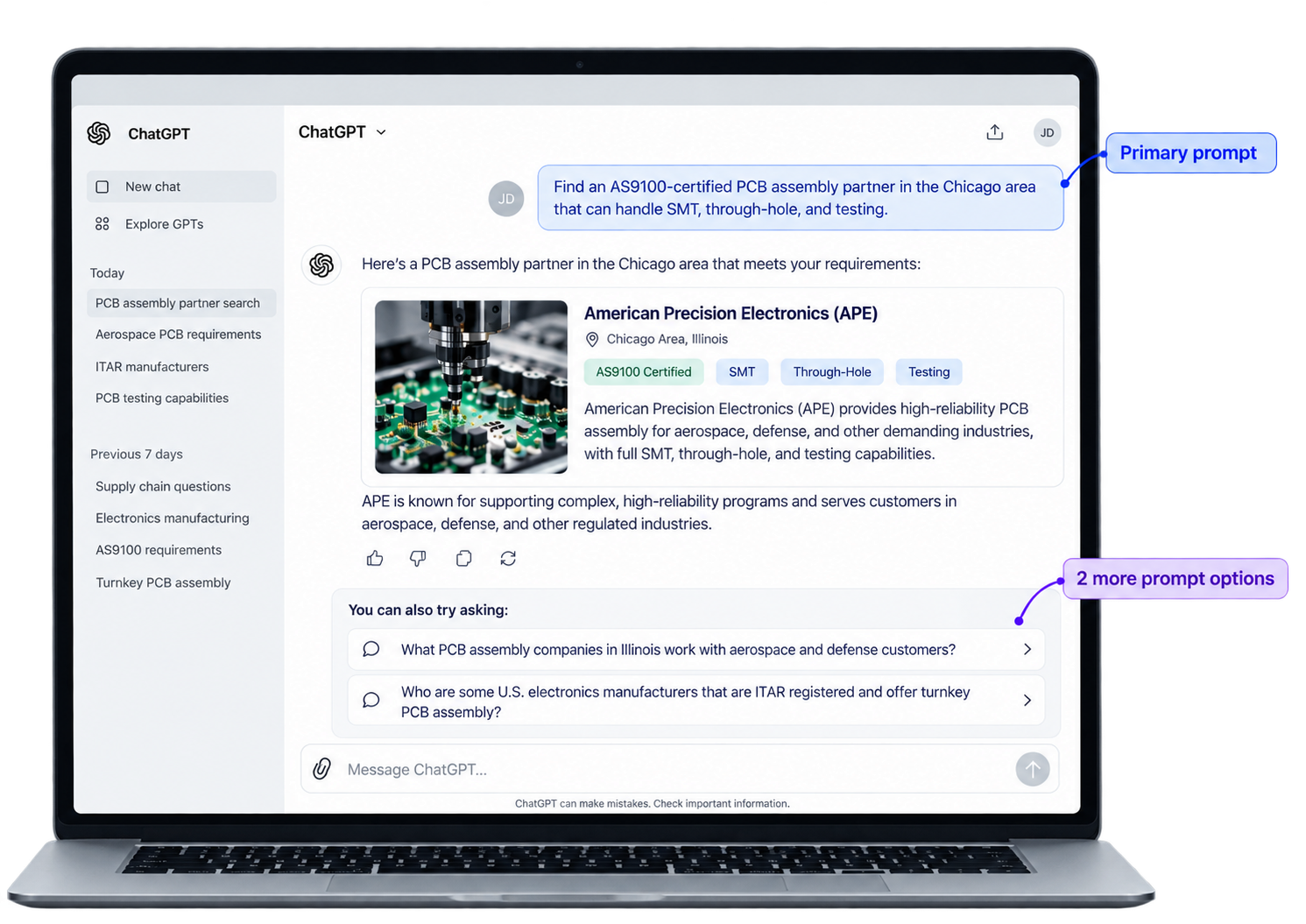
When you answer the right questions in your content, you help AI search engines understand what you do, so they can surface your business name (instead of your competitors!) in responses.
#4 Make It Easy to Request a Quote
A potential customer should be able to contact your sales team easily, so place a “Request a Quote (RFQ)” button on important pages on your website. A quote is an estimate of how much something will cost. Making it easy for buyers to request a quote can help turn an inquiry into a possible sale. Keep your form short, requesting only the customer’s name, contact details, and inquiry. Make sure that the form is easy to read and fill out. Check that it is mobile-friendly with large buttons, so it is easy to tap. Finally, avoid having your customers search for your mobile number or email address on your pages. The easier you make it for your viewers to reach you, the more likely they are to send an inquiry.
#5 Stay in Touch With Potential Customers
Customers who have bought from you and liked your service are likely to purchase again and spread the word. By keeping in touch with them, you boost loyalty and encourage them to come back. Text or email messages let you stay connected. You can send old customers a list of your new products and services, keep them updated on promos, and send them short articles relevant to what you offer. You can also use targeted ads to reach those who have already visited your website. Bear in mind, however, that messages should be kept to a minimum. Do not send more messages than you need to just to stay visible.
#6 Connect Trade Shows With Online Marketing
While online marketing is the method most buyers use nowadays, trade shows are still an important part of sales. This is because organized events give your team a chance to meet more potential customers, discuss your products or services, and build relationships.
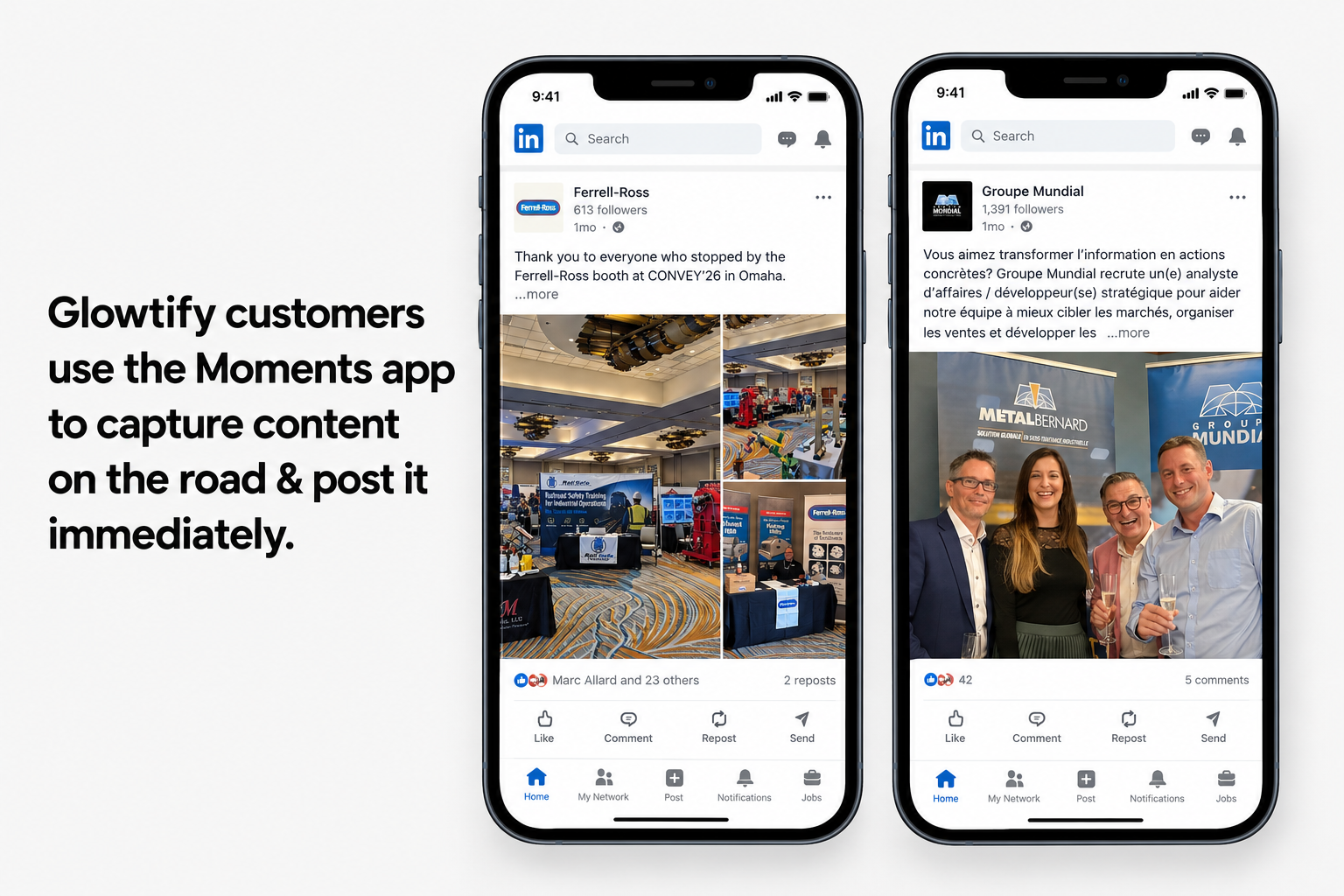
Once a relationship is built, it should be maintained even when the trade show is over. Your team should follow up with the people they have met at the trade show by sending them emails containing articles, case studies, and links related to your business or industry. You can also look at your trade show ROI, or return on investment, by comparing what you spent on the event with the sales and inquiries it helped bring in. This can help you decide if attending the event was worth the cost. If a potential buyer has spoken with one of your sales team members about a specific project during the trade show, that member should contact the customer to continue the conversation.
#7 Show Buyers Why They Can Trust You
Building your customer’s trust is not easy, especially if they just found you online. To show your buyer that they chose the right supplier, display real customer reviews that include stories and testimonials that prove you are credible. Add trust badges and payment icons on your website so that clients know you are a legitimate business. Share case studies that explain what your customer needed, what your company provided, and how the project was handled. Finally, include on your site an “About Us” page detailing your background and achievements.
What to Skip, and Why
Sometimes, businesses take unnecessary actions that ruin their marketing strategy. One common mistake is overthinking what to create and post online, and over-indexing on speaking about your own business versus answering real customer questions and needs. Your focus should be on answering client inquiries, introducing a new product or service, or explaining a manufacturing process. You also don’t have to have content on every social media platform, all at once. We recommend starting out with two target channels, and growing as you continue to learn and invest in your overall marketing machine. As long as you know where your potential customers spend time online, you can easily tap the market and be found.
Another mistake businesses make is making general claims. You must be specific about what you do, what you make, and who you serve. Clear information gives buyers something they can use when comparing suppliers. You cannot simply say that you are “the best manufacturer in Montreal” and expect customers to start contacting your sales team. Tell buyers what they need to know about you instead of claiming something that your competitors might also be claiming.
A 90-Day Starting Sequence
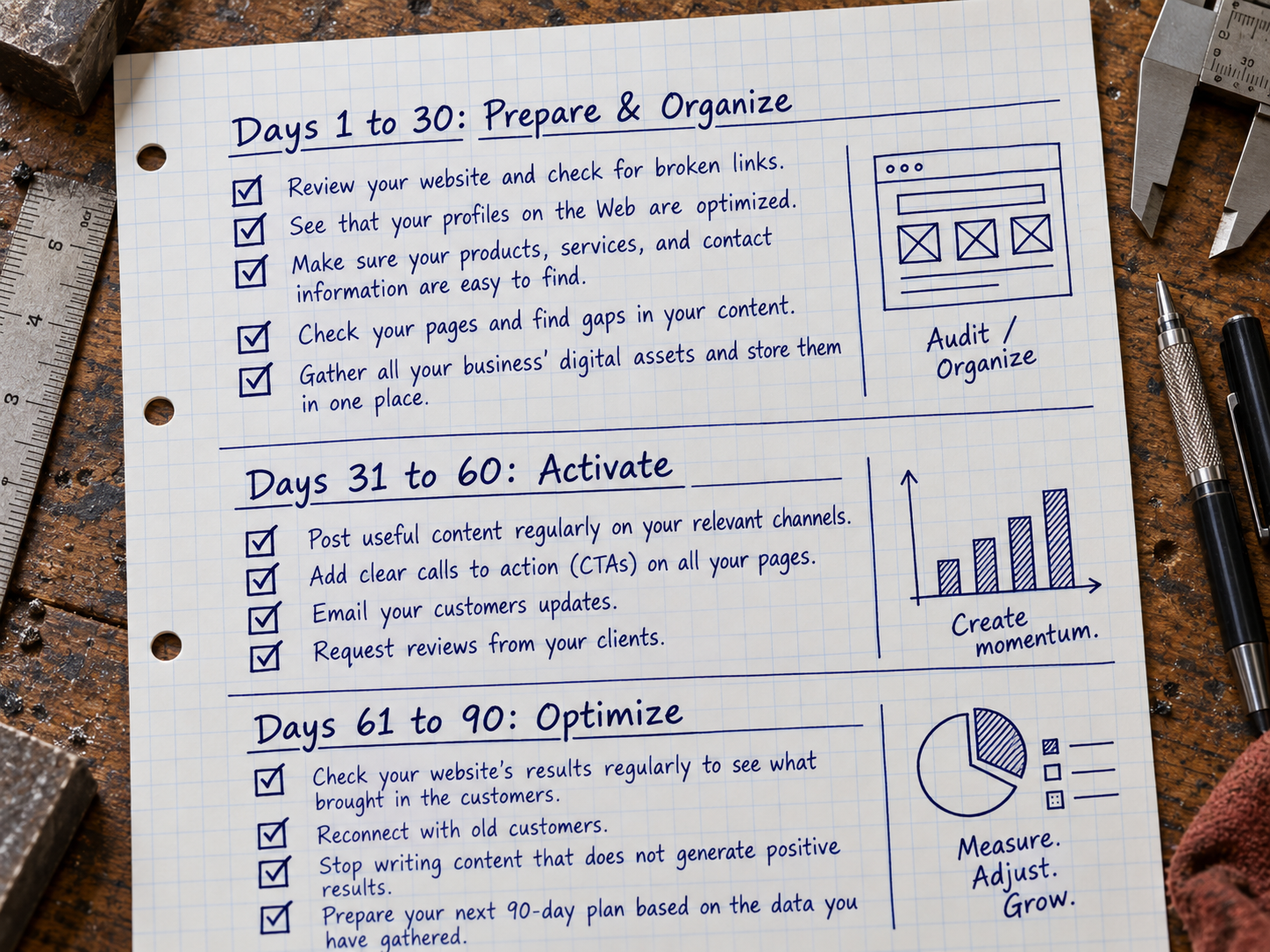
A 90-day marketing plan comprises three phases split into three months: preparation (Days 1-30), activation (Days 31-60), and optimization (Days 61-90). Here is a detailed outline of what happens during those phases:
Days 1 to 30: Prepare
- Review your website and check for broken links.
- See that your profiles on the Web are optimized.
- Make sure your products, services, and contact information are easy to find.
- Check your pages and find gaps in your content.
Planning your marketing can also be easier with the right tools. Glowtify’s marketing strategy feature uses your business goals, audience, positioning, and other information to help create a focused marketing direction. You can also use Glowtify’s content calendar to organize your planned content and campaigns in one place. This calendar lets you view your marketing by month, week, or list and helps you keep track of what is scheduled across different channels.
Days 31 to 60: Activate
- Post useful content regularly on your relevant channels.
- Add clear calls to action (CTAs) on all your pages.
- Email your customers updates.
- Request reviews from your clients.
Days 61 to 90: Optimize
- Check your website’s results regularly to see what brought in the customers.
- Reconnect with old customers.
- Stop writing content that does not generate positive results.
- Prepare your next 90-day plan based on the data you have gathered.
How to Measure Without a Marketing Team
Not all businesses have a marketing department. Sometimes, only one individual is doing all the work. If your business operates with a single-person team, you do not need to worry. The truth is, it does not take a team of experts to measure if your marketing is working.
One way to see if your marketing efforts are bringing in results is by asking new customers how and where they found you. For example, a customer might say they found you through your website, a social media post, or an email blast. With this information, you will be able to know where to focus. This approach is part of inbound marketing for manufacturers, where useful information helps potential clients find your business instead of relying only on direct advertising.
Another way to see if your marketing is effective is by monitoring how many people contact your business each week. Keep track of how many of those leads have become paying customers. These leads can become part of your sales pipeline, which is the group of potential buyers who are moving through the steps toward making a purchase. Then, compare the number of buyers you gained with the total number of leads you received. You must have a ballpark of how much you spend on advertising and other marketing tools so that you can divide that amount by the number of new customers you gained and get a basic idea of your cost per customer.
Finally, compare all your monthly sales. See when these sales increased. Was it when you published new content or when you ran a social media ad? Was it when you sent an automated email or when you utilized an SEO technique? Record the results in a spreadsheet so you can review your notes from time to time. If your team has limited bandwidth, meaning it has limited time and people available to handle the work, focus on the marketing activities that bring in the best results. This way, you can make better use of the time and resources you have.
Want to see how you can do this in Glowtify right now? Contact us right now.