AI Content: How to Use AI Without Sounding Like Everyone Else

Table of Contents
With the emergence of artificial intelligence, many marketing businesses have turned to AI tools to help them with content creation, and it is easy to see why. AI can produce polished drafts quickly, which can save companies with small teams a lot of precious time. However, polished AI content is not always good content. While AI tools can process and understand the information you give them, they still need useful information to work with. AI lacks the business-specific knowledge a human has, so its writing can be technically correct but still sound like it could have come from any company in the same industry. AI needs to know more about your business—from your expertise and goals to your products and customers.
Why Most AI Content Sounds the Same
The evolution of search has changed how people find and consume information. Instead of relying only on individual keywords, modern search systems now consider the meaning and context behind a query.
This is why most AI marketing content feels generic, because many businesses start with the same kind of prompt: they give AI a topic and then ask it to create something. What these businesses fail to do is provide some context that will tell the tool what the company does and is all about. Without enough information about a company, an AI tool will just follow keywords, instructions, and general knowledge. AI should know what the business sells, who it serves, and how it normally communicates.
What the Tool Needs to Know Before It Writes
The more useful context an AI tool for content publishing has, the less it has to guess about your business. Don’t just give it a topic to write about. Give it a background of your business—what you do, what you offer, and who you target. Tell it what makes your business different from your competitors. Be specific: tell AI the tone you want to use as well as the words and phrases you want it to avoid. If possible, supply it with examples of content that already sound like your company.
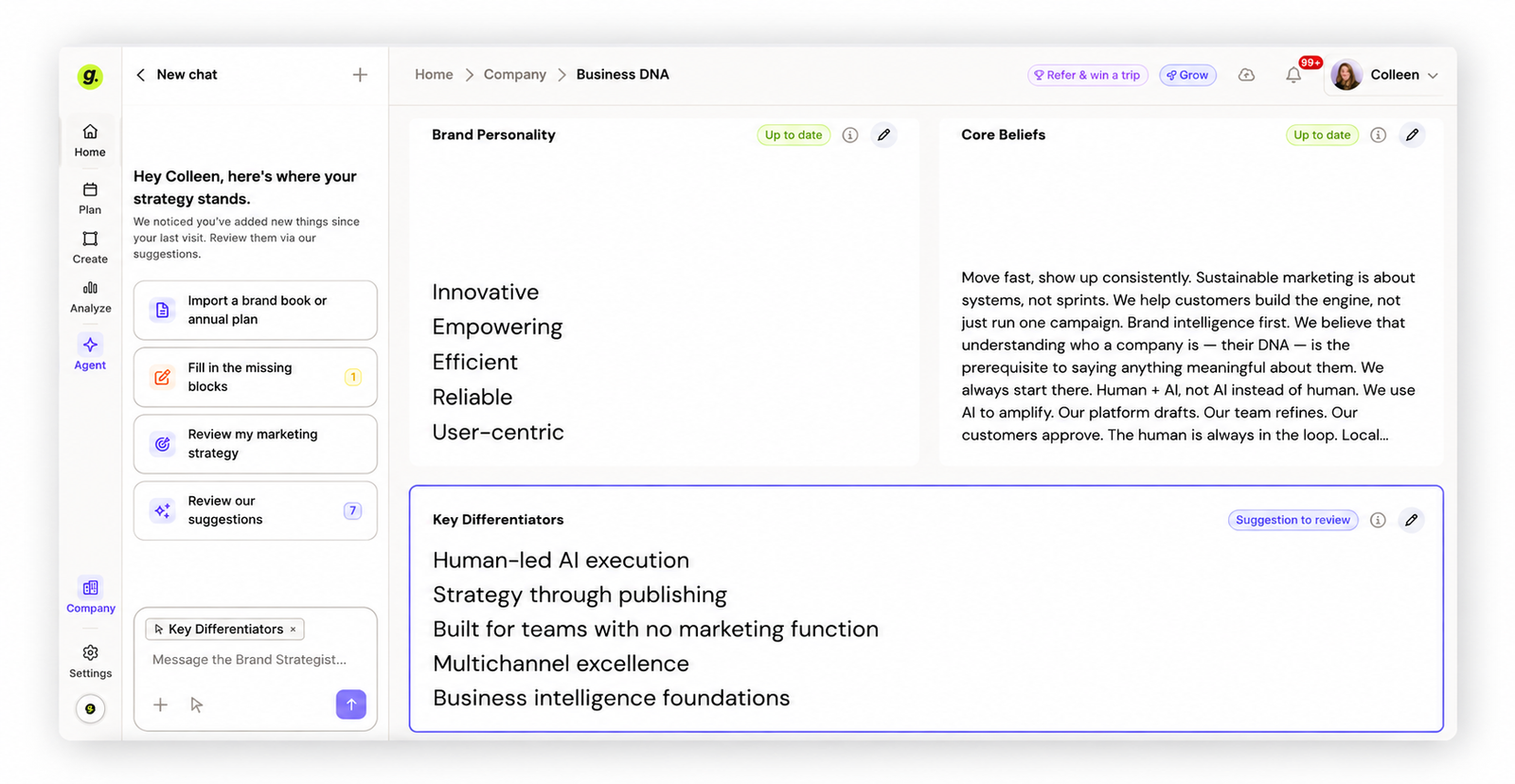
Remember, AI-powered tools can process large amounts of information and identify patterns and trends. If they understand your business, they can create more targeted marketing strategies. For Glowtify, this is where Business DNA fits into the process. Business DNA gives the platform information about the company, its offerings, and its audience. This is especially useful for teams that want to use AI content creation without losing the details that make their business different. Instead of starting from a blank prompt every time, the team can give AI a consistent foundation to work from.
The Review Steps That Catch Generic Copy
Creating content involves a strategic blend of creativity and data analysis. Businesses should focus on creating content that addresses their audience’s needs while providing useful and relevant information. Before publishing, follow these steps to make sure your content is accurate, specific, and sounds like your business.
#1 Check the facts and details
AI can produce confident-sounding paragraphs. However, they still need to be verified. Make sure the information, such as your name and contact details, is accurate and consistent across all sources.
#2 Identify all generic language
If a sentence written by AI could appear on almost any company’s website, it should be rewritten to be more specific. If you must, replace broad statements with real examples, anecdotes, or information from your own team. Add customer questions and industry details, if needed.
#3 Check the voice
See if the content sounds like something your company would actually say, as this is one of the most important checks when using brand voice AI tools.
#4 Add the details AI cannot know on its own
Remember, your business is unique. Also, AI does not have the business-specific knowledge that your team has. Make sure you supply AI with all relevant information about your company.
Where Not to Use AI at All
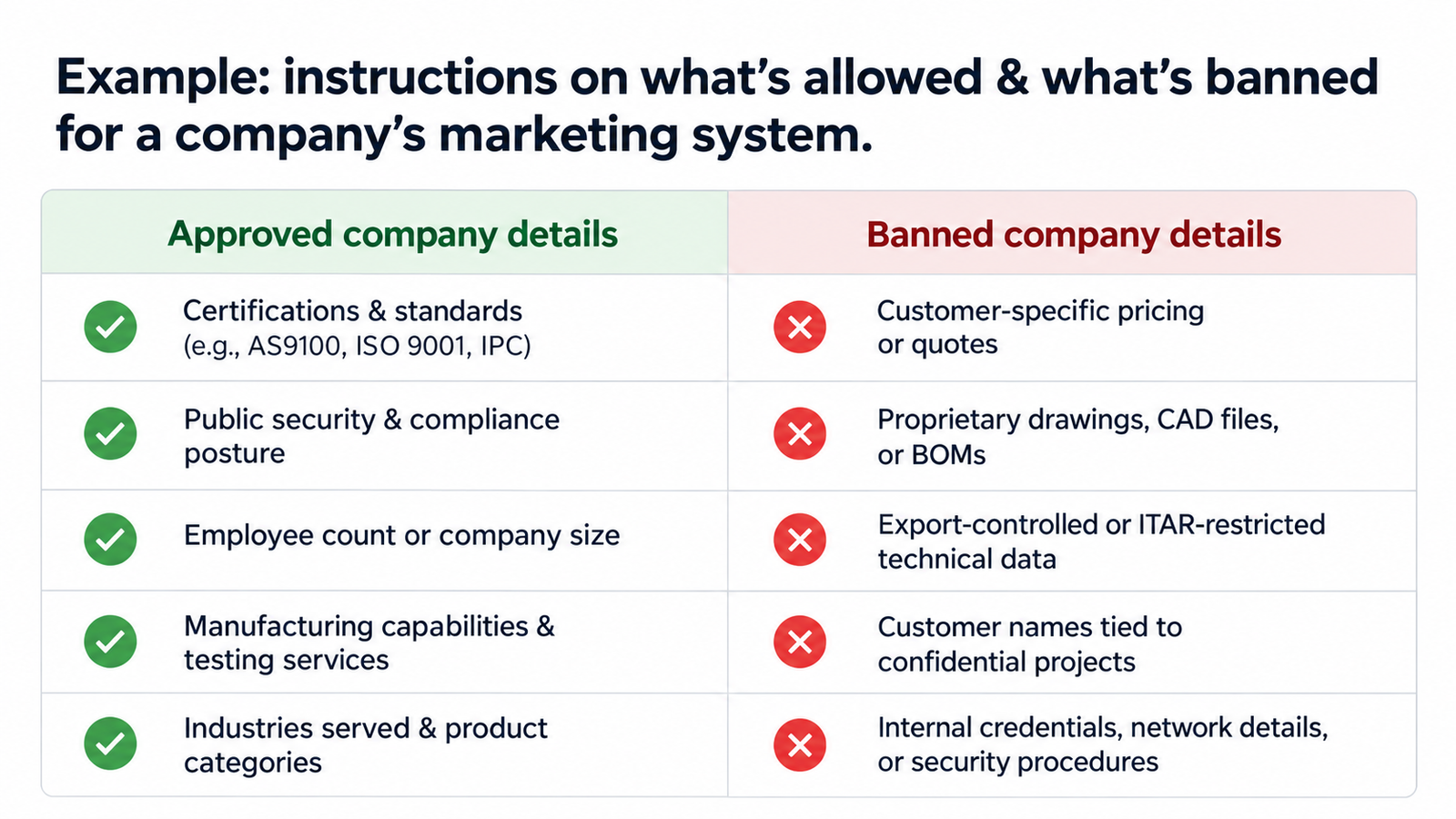
While AI offers numerous benefits, its adoption is not without challenges. Businesses must navigate issues such as data privacy, ethical considerations, and technological barriers. Addressing these challenges requires a comprehensive understanding of AI’s implications and a commitment to responsible implementation.
By proactively managing these challenges, businesses can maximize the benefits of AI while minimizing potential risks. But what are the situations where AI should not do the main work?
Many businesses use AI tools to help them organize their notes from firsthand experience. Sure, AI can help structure technical information, but it still needs human expertise and knowledge to check important technical claims.
This applies to customer communication, legal statements, company announcements, or content where the exact wording matters. Always remember that, while AI can assist with a draft, it is still the business that should have the final say.
This does not mean AI has no role in these situations. It can still help with research, organization, summaries, and increasing the amount of output you have significantly. The point is not to use it for everything. Just use it where it helps without handing over decisions that require human knowledge and judgment.
A Simple Approval Workflow for a Small Team
The more relevant information an AI tool has, the less it has to guess when creating a draft. This is why you should not worry if you have a small marketing team. With a simple workflow, you can keep your content moving while making sure a person remains responsible for the final result.
Start by giving AI the context it needs. This can include Business DNA, audience information, the topic, and the goal of the content. Next, use AI to help with the first draft. It can assist with research, organization, and outlining. Finally, review the content.
Check the facts, tone, clarity, examples, and claims. Look for anything that sounds generic or does not fit the way your company normally communicates. This is where human input matters most. Add real examples, company knowledge, customer insights, and opinions that make the content specific to your business. These details can turn a general AI draft into content that feels useful and recognizable.
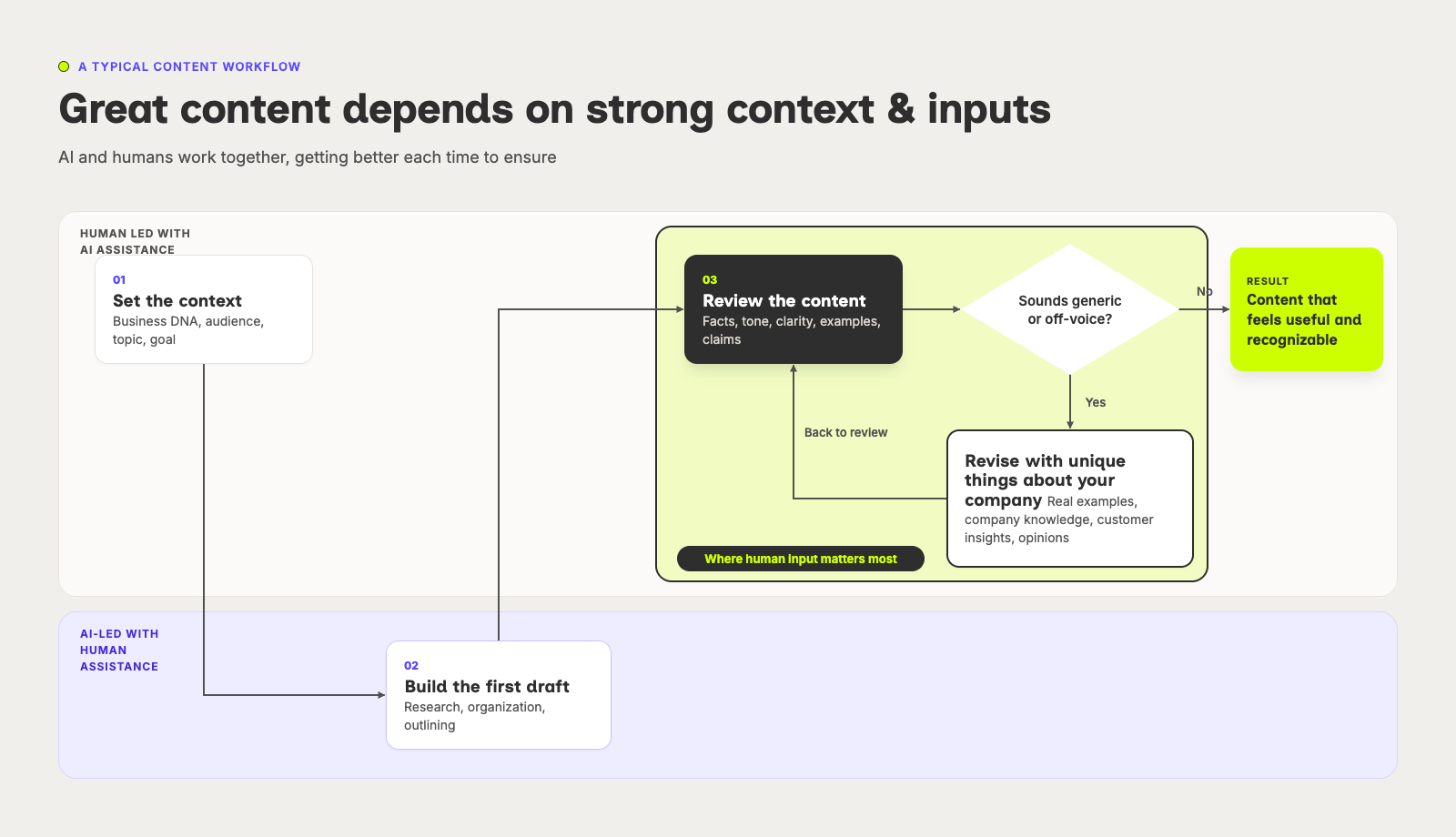
Before anything goes live, a team member should have the last say. Glowtify often includes human review before publishing, so AI content can be reviewed and approved by a person before it is published. This gives small teams with no marketing function at all a simple checkpoint to catch errors, refine specific language, and make sure the content accurately reflects the company.
Once the content has been reviewed and approved, it is ready to go live. The goal is not to remove AI from the content process, but to make sure there is still a person behind what the company publishes. And remember, AI learns continuously: the more you work with AI and the more feedback you give it, the better it will get with every draft.