How to Build a Marketing Plan for a Manufacturing Company

More and more buyers are now searching for suppliers online, replacing traditional B2B marketing methods like trade shows and referrals. This is why many manufacturing companies now focus on digital marketing so they can attract more customers, rather than relying on old ways of doing business.
However, not all know where and how to start. They know what they want to achieve, but they don’t have a clear plan. This is why having a marketing plan for a manufacturing company is important. A plan helps a business define its goals and stay on track.
If you work with construction products or building materials, the same principles can support a marketing plan. The specific audience and channels may vary, but the plan should still connect marketing activities with the company’s broader business goals. Learn how to build that plan in this article.
What You Already Have Before You Plan Anything
Before you write a marketing plan, you should first understand the foundation of your business. This includes your mission, vision, and value proposition. Your mission should explain the main reason why your company exists. Meanwhile, your vision should indicate what your business wants to achieve in the future. Finally, your value proposition should explain why buyers should choose your company instead of your competitors.
Once you have defined your core identity, it will become easier for you to understand your audience, decide what to say to them, and determine how much time and money you should put into marketing. This is a good starting point because you are building around the business you already have, not starting from scratch.
Setting One Primary Goal for the Year
A business should only have one primary goal for the year if it wants its marketing plan to have a clear direction. Otherwise, your team’s efforts can get spread across too many small tasks. What you want is to spend time and money on the things that matter most. Your primary goal should be connected to what your company needs the most in this exact moment.
Keep the goal simple and easy for your team to understand. For example, instead of trying to increase sales, website traffic, and social media followers all during the same month, choose the result that matters most to your business right now. So if, for example, you are a manufacturer, your main goal should be connected to launching a new product line, getting more qualified inquiries, or reaching a new group of buyers.
The same applies when developing a marketing plan for a construction company. Having one clear goal and a building material marketing strategy helps the business decide which marketing activities are worth focusing on and which ones can be left out. Glowtify's marketing strategy feature can help turn those goals into a focused marketing direction. It uses your business goals, positioning, and audience insights to help shape a strategy that guides your marketing activities throughout the year.
Choosing Three Channels, not Eight
Three channels done properly beats eight done badly. What does this mean? It simply means that, while digital marketing helps manufacturers reach potential buyers throughout the research and buying process, businesses do not have to be on every platform just so they can be visible. More often than not, trying to manage eight or more marketing channels can lead to mediocre results. Whereas three channels done properly are more effective than eight channels done badly.
Therefore, choose the right channels where your buyers are most likely to find and research your company. Do not choose a channel simply because other companies are using it. If you do not know where to start, focus on these three marketing channels:
#1 Search Engine Optimization (SEO)
SEO is the practice of optimizing webpages so they rank highly in search results on search engines like Google. An optimized website brings in steady traffic from customers who are looking for your product.
#2 Social Media Marketing
Social media marketing is the use of online platforms like Facebook, Instagram, and TikTok to promote a product or service, share content, and talk directly with your target audience in real time.
#3 Email Marketing
This marketing strategy uses email to promote products or services, send updates, share news, and build relationships with current and potential customers. It helps deliver a high return on investment for sales by costing nothing to reach your audience and letting you target people based on their interests.
Building the Twelve-Month Calendar
Once you have defined your main goal and chosen the right three channels, you can start planning your year. Your 12-month calendar should give your team a clear view of what needs to happen and when. It is not about just filling each box with ideas. Rather, it is about planning each step specifically month by month. Map events such as product launches, trade shows, and industry conferences. Name specific people to handle each task, then write the deadlines. If events are all planned for the same week, you can move some tasks earlier and give your team more time to prepare.
For those looking for an idea on how to organize a content calendar, Glowtify has a feature that gives teams a visual view of planned and suggested campaigns across channels. It organizes campaigns and important dates, making it easier for users to see what is planned throughout the year.
Here is a one-month calendar example:

Marketing Budget & Who Does the Work
Every marketing plan clearly shows who is responsible for each task and how much money should be set aside for it. The marketing director and digital campaign strategist usually lead the campaign strategy and launch. The former oversees the plan, while the latter updates the website. Meanwhile, the content writer creates the content and email.
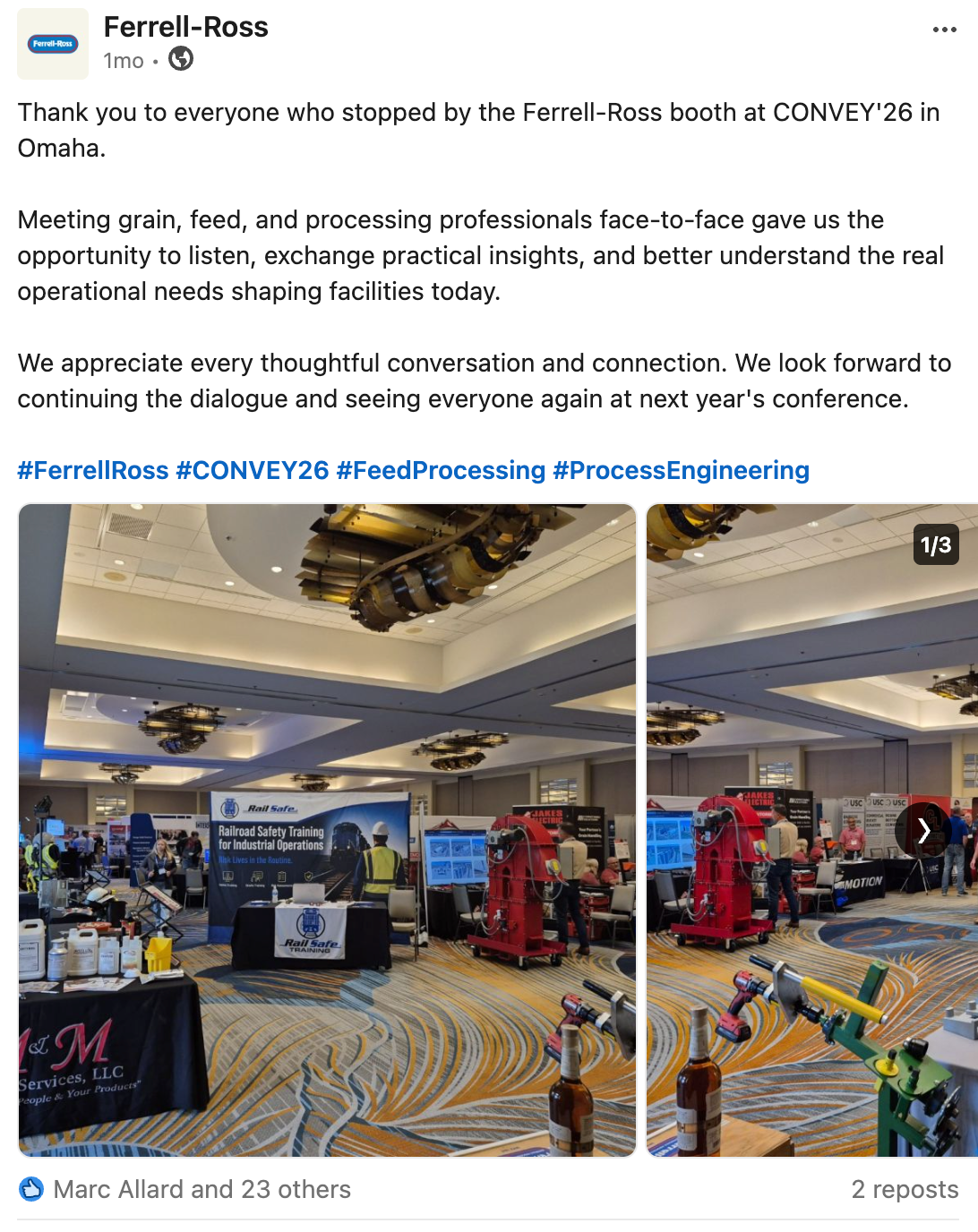
In trade shows, the sales and marketing teams handle the booth, while the graphic designer takes charge of the printed materials such as ads and brochures. Crucially, teams on-site need to ensure they take photos o the event so teams can share information about their presence at the event during & after the show. This is an excellent way to stay top-of-mind with people you met.
Here’s an example of how Ferrell-Ross, a specialized manufacturer in the framing industry, promotes their presence at trade shows.
When it comes to reviewing the annual results, it is the marketing director and finance team that lead the pack. Staying in touch with important customers is what account managers are in charge of.
The cost of marketing can vary depending on the number of people doing the work and what the work involves. This may include website creation, paid search, design, video, or trade shows. If your company has a limited budget, focus on the work most closely connected to your main goal. Commit only to how much you can, allocating no more than 12% of your gross revenue to marketing. These roles are often very specialized and often come with a price tag that matches, which is why Glowtify has built all of these specializations into one platform for manufacturers.
What to Review Each Quarter
Reviewing your marketing plan every quarter helps you see what is working and what is not. Look at what you have accomplished, what brought in the inquiries, what your sales team have been hearing from prospects, and what you need to change. By comparing your results with your yearly goal, you will know which activities need to be stopped and, instead, put more effort and money into campaigns that are getting better results. These reviews do not have to take a lot of time. Even a short meeting can help your team spot problems early and decide what needs to change before the next three months begin.
When reviewing your plan, look at your quarterly performance. Check if your website has gained more visitors, which pages get the most attention, and whether you are appearing on search tools more. For your marketing campaigns, check your ads, social media, and email results to see which ones have helped bring in actual business.
Aside from looking at what went well in the past three months, you should also look at what didn’t meet your expectations. If certain parts of your campaign did not get good results, you can exclude them in the next quarter, then try to find out the reason for the lack of success.
It is also important that you review your budget. Recall how much you had planned to spend at the start of the quarter and how much you actually spent. If one marketing activity did not produce as well as expected, you can choose to move some of the money spent on it to a new and more effective activity instead.
Finally, apply what you learned the previous quarter to the next. Make the necessary modifications even if it means adjusting your goal. After all, the purpose of a quarterly review is to keep what works, change what does not, and make sure your marketing plan stays focused on your main goal.
The One-Page Plan Template
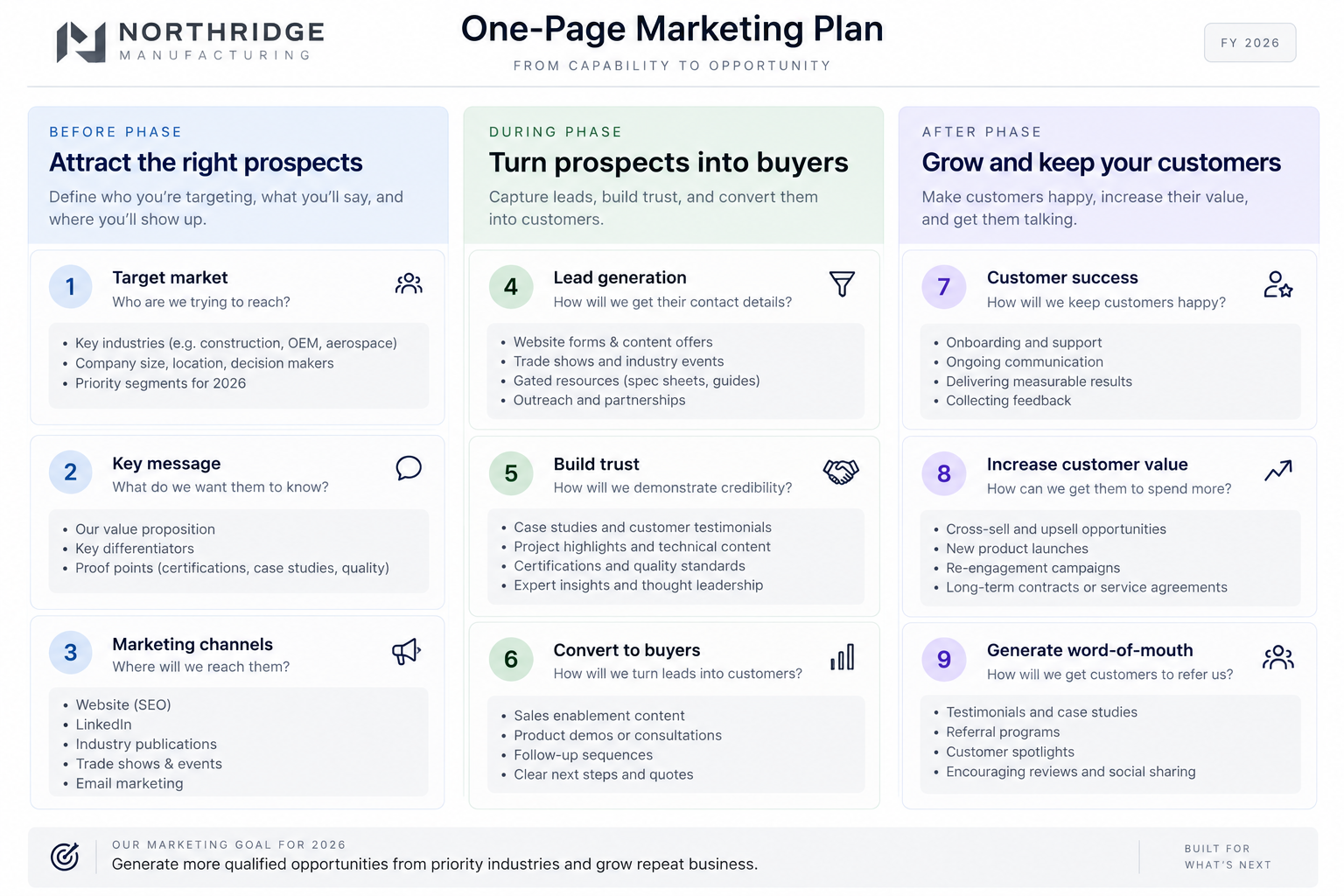
A one-page marketing plan template is a simple document that puts the main parts of your marketing strategy together on a single page. It is similar to a marketing checklist, which helps make sure you cover the key tasks and details before putting your plan into action. You can also use an online marketing planner to help you organize your goals, activities, important dates, budget, and responsibilities in one place.
Popularized by marketer Allan Dib, a single-page marketing template is divided into three main phases and nine blocks. The three phases are the “before phase”, the “during phase”, and the “after phase”.
The before phase focuses on a business’ prospects. It asks who the target market is, what the company’s message is, and what channels the business will be using to reach its audience. Meanwhile, the during phase focuses on the leads. It asks how a company will get the contact details of its prospects, how the team will build its customers’ trust, and how it will turn these individuals into buyers. Finally, the after phase focuses on the clients. It asks how a business intends to make its customers happy, how it can get these people to spend money, and how it can get word-of-mouth.
Conclusion
A marketing plan for a manufacturing company does not need to include every possible marketing activity. The most important thing is to create a plan that your team can easily follow. A simple plan with clear, realistic tasks is more useful than a complicated plan that sits on a desk and never gets used.
Remember that a good marketing plan should not only tell you what to do but also help you decide what not to do. Your plan is a guide, not a set of rules that can never change. As your business and market change, your marketing plan should change with them.
Want Glowtify to jump right to getting your marketing plan in place, right now? Glowtify has manufacturing companies like you covered. Click here to schedule time right now.